The False Monstrance
(Drawing on my notes from The Matter with Things - Iain McGilchrist)

When we decide not to worship divinity we do not stop worshiping, we merely find something less worthy to worship. Modernism drastically changed the boundaries between the human and the divine. We now inhabit a disenchanted realm where reason has triumphed over faith. Our lack of a rational understanding of the limits to reason may prove fatal. We have a religious belief in the unconditional power of organised science, a utopian faith in scientific advance, where science has displaced religion.

Man dwarfs God - Boston skyline https://flic.kr/p/2rR4ZjE
The coherence of a civilisation depends on accepting the reality and the value of the principles which we do not and perhaps never can fully understand. In all societies hitherto this has been achieved by the influence of knowledge embodied in traditions (sometimes religious). Traditions that ask for acceptance by an appeal to the imagination, not to reason alone. Modernists regard all those beliefs as superstitions and refuse to accept or to submit to anything which cannot be rationally understood.
The rationalist fails to apprehend that reason is not sufficient. He has failed to grasp the limitations to our conscious reason. The rationalist inevitably comes to despise the institutions and customs which have not been consciously designed. He would thus become the destroyer of the civilisation built upon those customs and traditions.
It is not rational to assume without evidence that rationality can disclose everything about the world just because it can lead us to the disclosure of many important things.
Rationality is exclusive - reason is inclusive balancing rationality with intuition, emotion, and imagination. It is presupposed by science that the universe is fully comprehensible by a human being and that there is nothing purposive about the cosmos. But, these are things we cannot know.
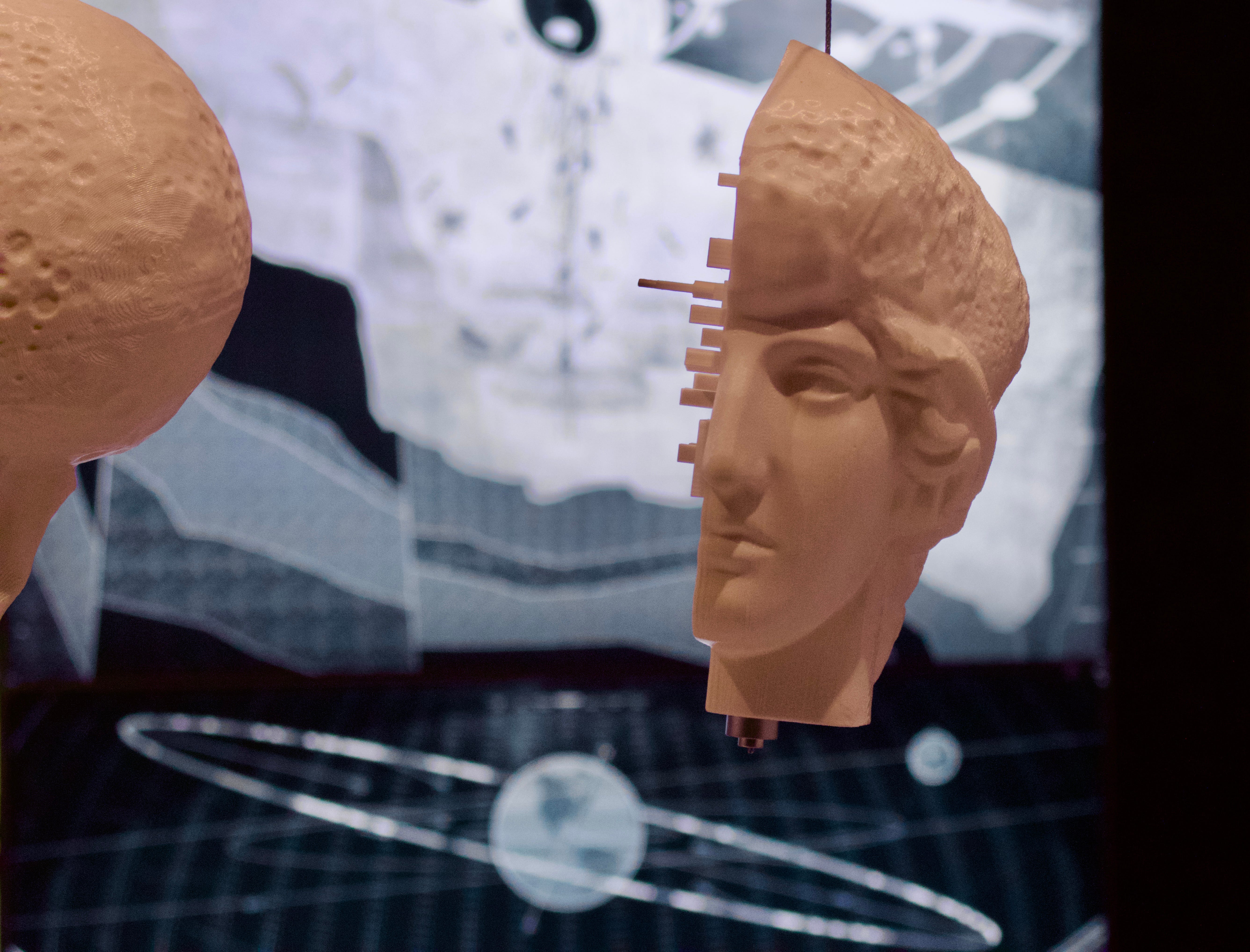
Mistaken Visions of Humanity https://flic.kr/p/2rRiQ9N
There is something special about living things. In biology all is becoming, never just being. At the molecular (DNA) level, order is actually imposed by higher level constraints, top-down causation. But top-down causation is not supposed to happen in the reductionist model. Cells and organisms have evolved to become cognitive and sentient entities that act and interact purposefully to ensure survival, growth and proliferation: Protein coding genes are composed de-novo; Epigenetic genes react and develop orders of magnitude faster than permitted by random selection. It is impossible for the modernist rationalist scientist to believe that there may be purpose to the cosmos. The dogmatic reductionist model blinds us to the obvious. Scientists who in private say that they believe in purpose in nature cannot say so in public for fear of losing their jobs. To so would be to admit to a heresy. Perhaps we lack the appropriate metaphor to apprehend nature. Perhaps we have mistaken part of the truth for the whole. Perhaps science cannot provide us with the insights which we most need for our civilisation to flourish.